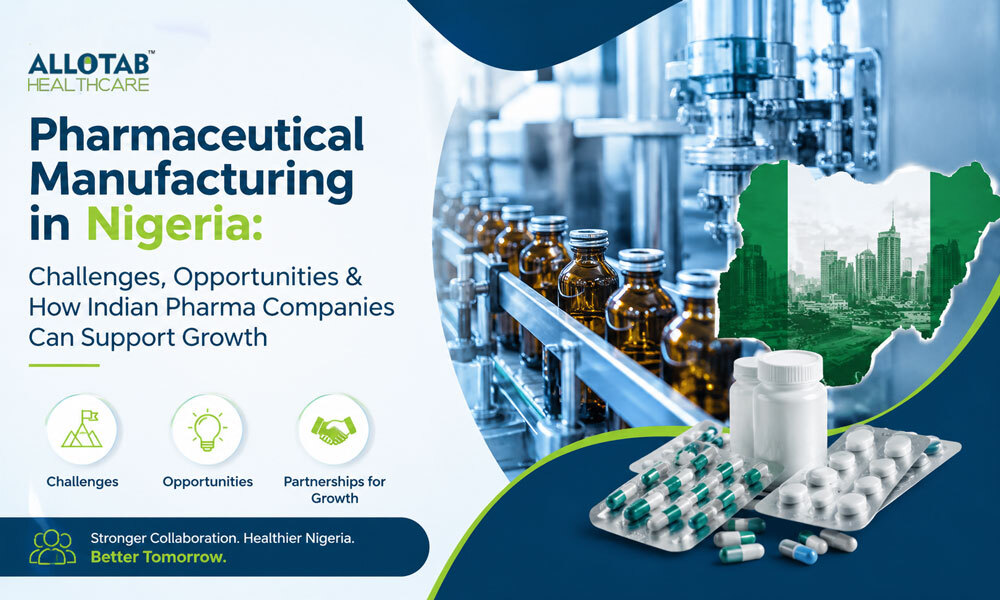
Nigeria is one of Africa’s largest healthcare markets and has become an emerging destination for
pharmaceutical businesses, investors, and international healthcare suppliers. With a rapidly
growing population, increasing healthcare awareness, and rising demand for quality medicines, the
Nigerian pharmaceutical sector presents significant opportunities for global pharmaceutical
manufacturers.
However, despite its growth potential, the pharmaceutical manufacturing industry in Nigeria
continues to face several challenges, including limited local production capacity, dependence on
imported raw materials, infrastructure limitations, and the need for advanced manufacturing
technologies.
These challenges have created opportunities for experienced international pharmaceutical
companies, especially Indian pharmaceutical manufacturers, to support Nigeria’s healthcare
ecosystem through quality medicines, contract manufacturing partnerships, technology transfer,
and reliable supply solutions.
As a trusted pharmaceutical manufacturing and export partner, Allotab Healthcare supports
healthcare distributors, pharmaceutical companies, and international partners by providing
quality-focused manufacturing solutions designed for global markets.
Overview of Nigeria’s Pharmaceutical Industry
Nigeria represents one of the most important pharmaceutical markets in Africa due to its large
population and increasing demand for healthcare products.
The country’s pharmaceutical sector includes:
- Local pharmaceutical manufacturers
- International pharmaceutical companies
- Importers and distributors
- Hospitals and healthcare institutions
- Government healthcare programs
While Nigeria has developed local manufacturing capabilities, a significant portion of
pharmaceutical products and active pharmaceutical ingredients (APIs) are still sourced
internationally. This dependency creates opportunities for reliable pharmaceutical exporters and
contract manufacturing partners.
The demand for medicines continues to increase due to:
- Growing population
- Rising prevalence of chronic diseases
- Improved healthcare infrastructure
- Increased access to medical services
- Government focus on healthcare development
Major Challenges Facing Pharmaceutical Manufacturing in Nigeria
1. Dependence on Imported Raw Materials
One of the biggest challenges faced by pharmaceutical manufacturers in Nigeria is dependence on
imported APIs and pharmaceutical ingredients.
Limited local production of raw materials increases:
- Manufacturing costs
- Supply chain risks
- Production delays
- Dependence on international markets
Developing stronger pharmaceutical supply chains and international manufacturing partnerships
can help overcome these challenges.
2. Limited Manufacturing Infrastructure
Advanced pharmaceutical manufacturing requires modern facilities, sophisticated equipment,
quality control laboratories, and regulatory compliance systems.
Some manufacturers face challenges related to:
- Production capacity
- Advanced technology adoption
- Manufacturing automation
- Quality testing facilities
Partnerships with experienced global pharmaceutical manufacturers can help improve access to
advanced production capabilities.
3. Regulatory and Compliance Challenges
Pharmaceutical products must meet strict quality and safety requirements before reaching
patients.
Manufacturers need to maintain:
- Good Manufacturing Practices (GMP)
- Quality assurance systems
- Product documentation
- Regulatory approvals
- Batch testing procedures
Strong regulatory systems are essential for building confidence among healthcare providers and
consumers.
4. High Production Costs
Pharmaceutical manufacturing requires significant investment in:
- Equipment
- Skilled workforce
- Quality systems
- Raw materials
- Research and development
Higher operational costs can affect medicine affordability and market competitiveness.
Growth Opportunities in Nigeria’s Pharma Sector
Despite these challenges, Nigeria offers significant growth opportunities for pharmaceutical
companies.
1. Increasing Demand for Quality Medicines
Healthcare demand continues to rise, creating opportunities across multiple therapeutic
segments.
High-demand categories include:
- Antibiotics
- Cardiovascular medicines
- Diabetes medicines
- Pain management products
- Nutraceuticals
- Pediatric medicines
- Dermatology products
2. Growth Through International Partnerships
Nigeria’s pharmaceutical sector is increasingly benefiting from partnerships with international
manufacturers.
Collaboration with global pharmaceutical companies can support:
- Technology exchange
- Quality improvement
- Manufacturing expansion
- Better healthcare access
Indian pharmaceutical companies are well-positioned to support Nigeria due to their experience in
affordable medicine manufacturing and international exports.
3. Contract Manufacturing Opportunities
Contract manufacturing provides an effective solution for businesses that want to enter or expand
in the Nigerian market without investing heavily in manufacturing infrastructure.
Benefits include:
- Lower investment requirements
- Faster product launches
- Access to certified manufacturing facilities
- Improved production efficiency
- Flexible product development
Why Indian Pharmaceutical Companies are Important for Nigeria
India has established itself as a global pharmaceutical manufacturing leader because of:
- Advanced manufacturing facilities
- Cost-effective production
- Large pharmaceutical product portfolio
- Skilled pharmaceutical professionals
- International regulatory experience
Indian pharmaceutical companies can support Nigeria by providing:
- Generic medicines
- Specialty formulations
- Contract manufacturing services
- Export solutions
- Regulatory documentation support
How Allotab Healthcare Supports Global Pharmaceutical Growth?
At Allotab Healthcare, we understand the requirements of international healthcare markets and
provide reliable pharmaceutical manufacturing solutions for global partners.
Our capabilities include:
WHO-GMP & EU-GMP Compliant Manufacturing
We focus on maintaining international quality standards through controlled manufacturing
processes and strict quality management systems.
Contract Manufacturing Solutions
Allotab Healthcare provides customized pharmaceutical manufacturing solutions for businesses
looking to develop and expand their product portfolios.
Regulatory Documentation Support
We assist partners with essential pharmaceutical documentation requirements, including:
- CTD Documentation
- ACTD Documentation
- COPP
- FSC
- Product Registration Support
Wide Product PortfolioThe future of Nigeria’s pharmaceutical industry looks promising as healthcare investments, local
manufacturing initiatives, and international collaborations continue to grow.
Export-Focused Pharmaceutical Solutions
From manufacturing to documentation and supply coordination, Allotab Healthcare helps
international partners simplify pharmaceutical sourcing.
Future Prospects of Pharmaceutical Manufacturing in Nigeria
The future of Nigeria’s pharmaceutical industry looks promising as healthcare investments, local
manufacturing initiatives, and international collaborations continue to grow.
Key growth drivers include:
- Increasing healthcare demand
- Government support for local production
- International pharmaceutical partnerships
- Improved manufacturing capabilities
- Growing demand for affordable medicines
With the right partnerships and investment, Nigeria has the potential to become one of Africa’s
leading pharmaceutical markets.
Conclusion
Nigeria’s pharmaceutical industry is experiencing transformation, creating both challenges and
opportunities for local and international businesses. While infrastructure limitations, regulatory
requirements, and supply chain challenges remain, the market offers significant potential for
growth.
Indian pharmaceutical manufacturers can play an important role by providing quality medicines,
contract manufacturing expertise, and reliable export solutions.
For healthcare distributors and pharmaceutical companies looking for a trusted manufacturing
partner, Allotab Healthcare offers quality-driven pharmaceutical solutions supported by
advanced manufacturing capabilities, regulatory expertise, and global market experience.